

Conditions

Plantar Fasciitis

Specialist-Led Pain Evaluation and Care

Overview

Specialist-Led Pain Evaluation and Care

Precision in diagnosis. Clarity in treatment.

Plantar fasciitis is the most common cause of heel pain, but persistent or recurring symptoms are a sign that the underlying drivers have not been properly addressed. The right diagnosis and a targeted treatment plan make the difference between months of management and lasting relief.

At Painacea, plantar fasciitis care is built around identifying exactly what is overloading the plantar aponeurosis and treating it with precise, minimally invasive solutions designed for long-term recovery, not repeated short-term relief.

Painacea is defined by:

  • Precision-led, minimally invasive approach
  • Specialist diagnosis, not symptom-based treatment
  • Focus on long-term control and functional recovery
Book a Specialist Consultation

About

What Is Plantar Fasciitis?

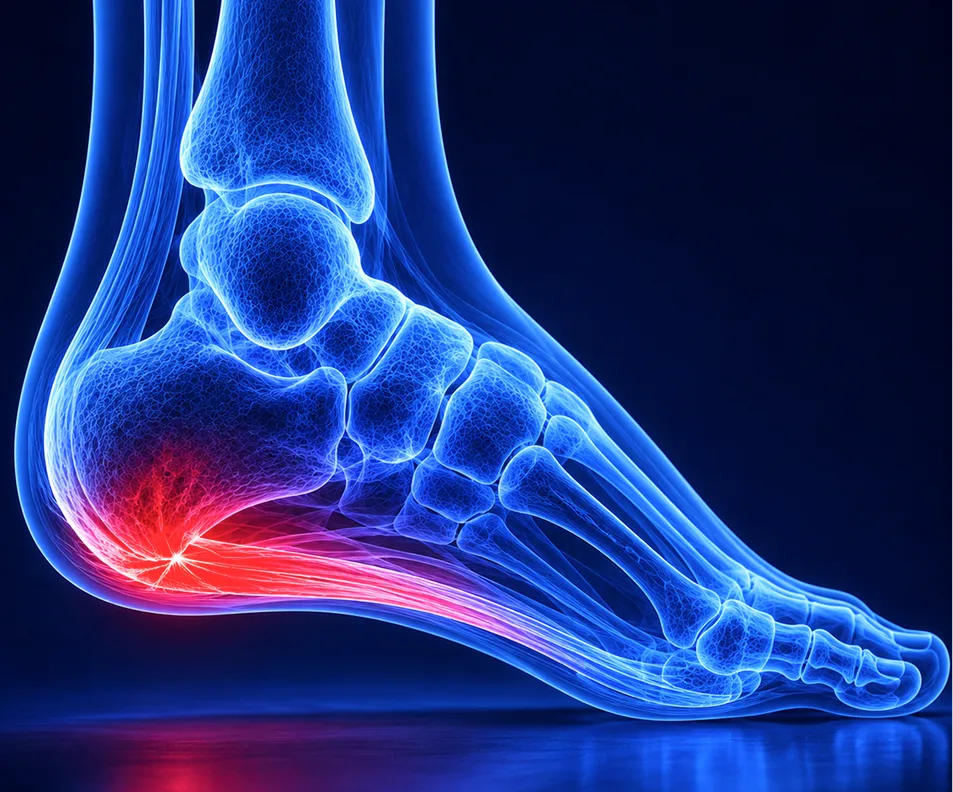
Plantar fasciitis is inflammation of the plantar fascia, a strong fibrous band of connective tissue, also known as the plantar aponeurosis, that runs along the sole of the foot from the heel bone to the toes. When this structure is repeatedly overstressed, it becomes inflamed at the point where it attaches to the heel bone, causing pain that can significantly limit daily activity.
What Is Plantar Fasciitis?

Most plantar fasciitis pain originates from:

  • Excessive mechanical loading of the plantar fascia insertion at the calcaneus

  • Tightness in the calf muscles and Achilles tendon increasing tension through the heel

  • Structural foot issues such as flat feet or high arches altering load distribution

  • Occupational or activity-related overuse of the foot on hard surfaces

  • Footwear that fails to support the arch adequately

The pattern often tells you more than the intensity:

  • Sharp heel pain on first steps in the morning: the hallmark presentation of plantar fasciitis

  • Pain along the sole that worsens after prolonged standing or activity: points to fascia overload

  • Tenderness at the inner heel: reflects the calcaneal insertion as the primary pain site

  • Stiffness that eases after a few minutes of walking: characteristic of plantar fascia tightness

  • Heel pain with a visible bony prominence: may indicate an associated calcaneal spur

Causes

What Are the Causes of Plantar Fasciitis?

Plantar fasciitis causes relate to anything that places excessive or repetitive strain on the plantar fascia beyond its capacity to recover. Both activity-related and structural factors contribute.

Common plantar fasciitis causes and risk factors include:

  • Prolonged standing, walking, or running on hard surfaces
  • A sudden increase in activity level or training load
  • Footwear that provides insufficient arch support or cushioning, including flat shoes and flip-flops
  • Flat feet or high arch feet, both of which alter how load is distributed across the plantar fascia
  • Tight calf muscles and Achilles tendon reducing flexibility and increasing tension through the heel
  • Excess body weight increasing compressive forces through the sole of the foot
  • Occupations requiring long periods on hard floors
  • Walking barefoot on hard surfaces, particularly at home
What Are the Causes of Plantar Fasciitis?
What Are the Symptoms of Plantar Fasciitis?

Symptoms

What Are the Symptoms of Plantar Fasciitis?

Plantar fasciitis symptoms are distinctive in their pattern, which is one of the most reliable indicators for diagnosis alongside clinical assessment and imaging.

Common symptoms include:

  • Sharp or stabbing heel pain on the sole of the foot, typically worst with the first steps in the morning
  • Pain along the plantar fascia pain areas, particularly at the inner heel where the fascia attaches to the calcaneus
  • Stiffness in the foot and heel after periods of rest that eases after a few minutes of walking
  • Dull, aching sole pain that builds again after prolonged standing or activity
  • Swelling or tenderness around the heel
  • A tight Achilles tendon often associated with ongoing symptoms
  • In persistent cases, pain that no longer settles with rest

Pain that is worst on first weight-bearing after rest and located at the base of the heel is the hallmark presentation of plantar fasciitis and should prompt early specialist evaluation to prevent the condition from becoming chronic.

Treatment

What Are the Treatment Options for Plantar Fasciitis?

Plantar fasciitis treatment at Painacea is guided by the severity and duration of symptoms and the specific mechanical factors identified. The approach is non-surgical first, with interventions matched to what is actually driving the condition.

Precision-Guided Interventions

For persistent plantar fasciitis that has not responded to conservative measures, targeted options include:

  • Regenerative therapies including platelet-rich plasma injected precisely into the plantar fascia insertion under ultrasound guidance, supporting tissue repair and reducing chronic inflammation. Evidence supports meaningful improvement in pain and function in cases that have failed standard treatment
  • Prolotherapy targeting the plantar fascia attachment to stimulate collagen repair and strengthen the tissue at the point of maximum stress
  • Image-guided corticosteroid injections to reduce acute inflammation and restore comfort when symptoms are severe, used selectively to avoid risk of fascia weakening with repeated use

Physiotherapy and Rehabilitation

To address the mechanical contributors to ongoing plantar fascia overload:

  • Plantar fasciitis physical therapy treatment targeting calf and Achilles flexibility to reduce tension through the heel
  • Intrinsic foot muscle strengthening and arch loading exercises to improve foot mechanics
  • Gait and footwear assessment to correct biomechanical patterns contributing to excessive fascia strain
  • Custom or prefabricated orthotic support to offload the plantar fascia during recovery and beyond

Long-Term Pain Control

Across all presentations, the goal is:

  • Resolving the cycle of chronic inflammation and recurrence
  • Reducing dependence on anti-inflammatory medication
  • Restoring the ability to walk, stand, and exercise without heel pain

Precision-Guided Interventions

For persistent plantar fasciitis that has not responded to conservative measures, targeted options include:

  • Regenerative therapies including platelet-rich plasma injected precisely into the plantar fascia insertion under ultrasound guidance, supporting tissue repair and reducing chronic inflammation. Evidence supports meaningful improvement in pain and function in cases that have failed standard treatment
  • Prolotherapy targeting the plantar fascia attachment to stimulate collagen repair and strengthen the tissue at the point of maximum stress
  • Image-guided corticosteroid injections to reduce acute inflammation and restore comfort when symptoms are severe, used selectively to avoid risk of fascia weakening with repeated use

Physiotherapy and Rehabilitation

To address the mechanical contributors to ongoing plantar fascia overload:

  • Plantar fasciitis physical therapy treatment targeting calf and Achilles flexibility to reduce tension through the heel
  • Intrinsic foot muscle strengthening and arch loading exercises to improve foot mechanics
  • Gait and footwear assessment to correct biomechanical patterns contributing to excessive fascia strain
  • Custom or prefabricated orthotic support to offload the plantar fascia during recovery and beyond

Long-Term Pain Control

Across all presentations, the goal is:

  • Resolving the cycle of chronic inflammation and recurrence
  • Reducing dependence on anti-inflammatory medication
  • Restoring the ability to walk, stand, and exercise without heel pain
Painacea

Why Choose Us

Why Choose Painacea?

Care is centred on identifying the source of pain and delivering targeted, effective solutions.

  • list icon

    17+ years of experience in pain medicine and anesthesiology

  • list icon

    Specialist in minimally invasive, image-guided interventions

  • list icon

    Strong focus on precise diagnosis before treatment

  • list icon

    Expertise in managing complex spine, nerve, and pain conditions

  • list icon

    International training across USA, Europe, and South Korea

  • list icon

    Academic leadership as Professor and Fellowship Mentor

Book a Specialist Consultation

FAQs

Frequently Asked Questions

Sharp heel pain on the first steps after rest, tenderness along the sole of the foot, and stiffness that eases after a few minutes of walking but returns with prolonged activity.

Prolonged standing on hard surfaces, flat or high arch feet, tight calf muscles, unsupportive footwear, and a sudden increase in activity load.

A combination of regenerative injections, physiotherapy targeting calf flexibility and foot mechanics, and orthotic support. For persistent cases, PRP or prolotherapy provides more durable relief than corticosteroid injections alone.

A calcaneal spur is a bony growth on the underside of the heel bone that develops in response to chronic plantar fascia stress. It is often found alongside plantar fasciitis but is rarely the direct source of pain. Treatment is directed at the fascia itself.

Very rarely. The vast majority of cases resolve with targeted conservative and interventional treatment. Plantar fasciitis surgery is considered only when symptoms persist beyond twelve months despite comprehensive non-surgical management.

Contact

Considering Further Evaluation for Persistent Pain?

A consultation can help determine appropriate next steps based on your condition.

hello@painacea.in +91 94192 00497

First Floor, Shrikant Chambers - c, 125, B Wing, next to RK Studios, Chembur, Mumbai - 400071

    Get a Precise Diagnosis