Conditions

MCL (Medial Collateral Ligament)

Specialist-Led Pain Evaluation and Care

Overview

Specialist-Led Pain Evaluation and Care

Precision in diagnosis. Clarity in treatment.

An MCL injury is one of the most common knee ligament injuries, yet without accurate diagnosis and targeted management, incomplete healing leads to chronic instability and long-term joint damage.

At Painacea, MCL injury care is built around identifying the exact grade and extent of ligament damage and treating it with targeted, minimally invasive solutions designed for full functional recovery.

Painacea is defined by:

  • Precision-led, minimally invasive approach
  • Specialist diagnosis, not symptom-based treatment
  • Focus on long-term control and functional recovery
Book a Specialist Consultation

About

What Is an MCL Injury?

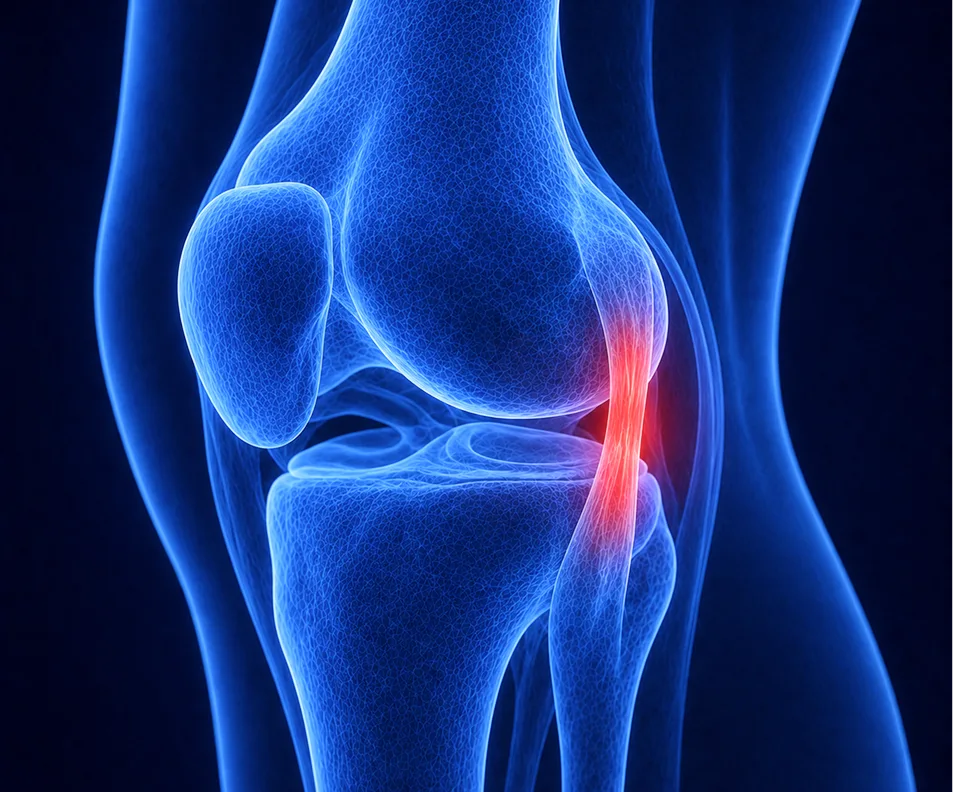
The medial collateral ligament, commonly known as the MCL, is a broad ligament running along the inner side of the knee. It connects the femur to the tibia and provides stability against valgus forces, preventing the knee from buckling inward.
What Is an MCL Injury?

Key characteristics include:

  • The MCL is the most frequently injured ligament of the knee

  • Injuries are graded from grade 1 mild sprain, to grade 2 partial tear, to grade 3 complete rupture

  • Grade 3 injuries often involve damage to surrounding structures including the ACL and meniscus

  • MCL injuries can also occur at the ankle, where the medial ligament complex is similarly vulnerable to inversion stress

  • Most MCL knee ligament injuries are managed non-surgically

  • Without appropriate treatment, chronic medial knee instability and progressive joint degeneration can develop

Causes

What Are The Causes of MCL Injury?

MCL injuries are caused by forces that push the knee inward beyond its normal range of movement.

Common causes include:

  • Direct impact to the outer side of the knee during contact sport
  • Sudden twisting or pivoting with the foot planted
  • Awkward landing from a jump placing valgus stress on the knee
  • Hyperextension of the knee joint
  • Rapid deceleration with a change of direction
  • Ankle MCL injury caused by inversion stress during running or uneven surface walking
  • Previous knee ligament injury increasing vulnerability to re-injury
  • Muscle weakness around the knee reducing joint protection
  • Playing on uneven terrain or with inappropriate footwear
What Are The Causes of MCL Injury?
What Are The Symptoms of MCL Injury?

Symptoms

What Are The Symptoms of MCL Injury?

MCL injury symptoms vary depending on the grade of injury and the structures involved. Recognising the pattern accurately is essential for appropriate management.

Common symptoms include:

  • Pain and tenderness along the inner side of the knee
  • Swelling over the medial aspect of the joint
  • Stiffness and restricted range of knee movement
  • Feeling of instability or the knee giving way under load
  • Pain that worsens with walking, twisting, or any valgus stress on the joint
  • Bruising along the inner knee appearing within hours of injury
  • In grade 3 MCL injuries, significant instability making weight bearing difficult
  • In ankle MCL injury, medial ankle tenderness, swelling, and instability on uneven ground
  • Persistent aching at rest in more severe presentations

MCL knee ligament injury symptoms involving instability during daily activities warrant specialist evaluation without delay to confirm the grade and rule out associated structural damage.

Treatment

What Are The Treatment Options for MCL Injury?

Treatment at Painacea is guided by the grade of MCL injury, associated structural damage, and the patient's functional demands. The approach is non-surgical first in the majority of cases, with interventions selected based on the specific drivers of pain and instability.

Precision-Guided Interventions

For pain and inflammation management across all grades of MCL injury:

  • Platelet-rich plasma therapy to accelerate ligament healing
  • Biologic treatments targeting tissue repair rather than symptom management alone
  • Particularly effective in grade 2 partial MCL tears

Physiotherapy and Rehabilitation

Structured rehabilitation is the foundation of MCL ligament injury treatment across all grades:

  • Progressive strengthening of the quadriceps, hamstrings, and hip stabilisers
  • Proprioceptive and neuromuscular retraining to recover joint position sense
  • Bracing and activity modification protocols

Long-Term Pain Control

Across all presentations of MCL injury, the goal is sustained, predictable recovery:

  • Reducing recurrence through structured rehabilitation and biomechanical correction
  • Minimising dependence on pain medication and anti-inflammatory drugs
  • Giving patients a clear, structured plan for returning to full activity safely and confidently

Precision-Guided Interventions

For pain and inflammation management across all grades of MCL injury:

  • Platelet-rich plasma therapy to accelerate ligament healing
  • Biologic treatments targeting tissue repair rather than symptom management alone
  • Particularly effective in grade 2 partial MCL tears

Physiotherapy and Rehabilitation

Structured rehabilitation is the foundation of MCL ligament injury treatment across all grades:

  • Progressive strengthening of the quadriceps, hamstrings, and hip stabilisers
  • Proprioceptive and neuromuscular retraining to recover joint position sense
  • Bracing and activity modification protocols

Long-Term Pain Control

Across all presentations of MCL injury, the goal is sustained, predictable recovery:

  • Reducing recurrence through structured rehabilitation and biomechanical correction
  • Minimising dependence on pain medication and anti-inflammatory drugs
  • Giving patients a clear, structured plan for returning to full activity safely and confidently
Painacea

Why Choose Us

Why Choose Painacea?

Care is centred on identifying the source of pain and delivering targeted, effective solutions.

  • list icon

    17+ years of experience in pain medicine and anesthesiology

  • list icon

    Specialist in minimally invasive, image-guided interventions

  • list icon

    Strong focus on precise diagnosis before treatment

  • list icon

    Expertise in managing complex spine, nerve, and pain conditions

  • list icon

    International training across USA, Europe, and South Korea

  • list icon

    Academic leadership as Professor and Fellowship Mentor

Book a Specialist Consultation

FAQs

Frequently Asked Questions

Grade 1 sprains heal in two to four weeks. Grade 2 tears take six to eight weeks. Grade 3 complete ruptures can take three to six months.

Tenderness and aching along the inner side of the knee, with swelling, stiffness, and a feeling of instability or the knee giving way under load.

Gentle walking is tolerated in grade 1 and 2 injuries. Grade 3 ruptures may require crutches initially. Weight bearing should be guided by pain levels and specialist assessment.

Direct impact to the outer knee, sudden twisting, awkward landings, or any force that pushes the knee inward beyond its normal range of movement.

Rarely. Most MCL injuries, including many complete grade 3 ruptures, heal successfully with conservative management. Surgery is considered when significant associated ligament damage is present.

Contact

Considering Further Evaluation for Persistent Pain?

A consultation can help determine appropriate next steps based on your condition.

hello@painacea.in +91 94192 00497

First Floor, Shrikant Chambers - c, 125, B Wing, next to RK Studios, Chembur, Mumbai - 400071

    Get a Precise Diagnosis