

Conditions

Failed Spine Surgery Syndrome

Specialist-Led Pain Evaluation and Care

Overview

Specialist-Led Pain Evaluation and Care

Precision in diagnosis. Clarity in treatment.

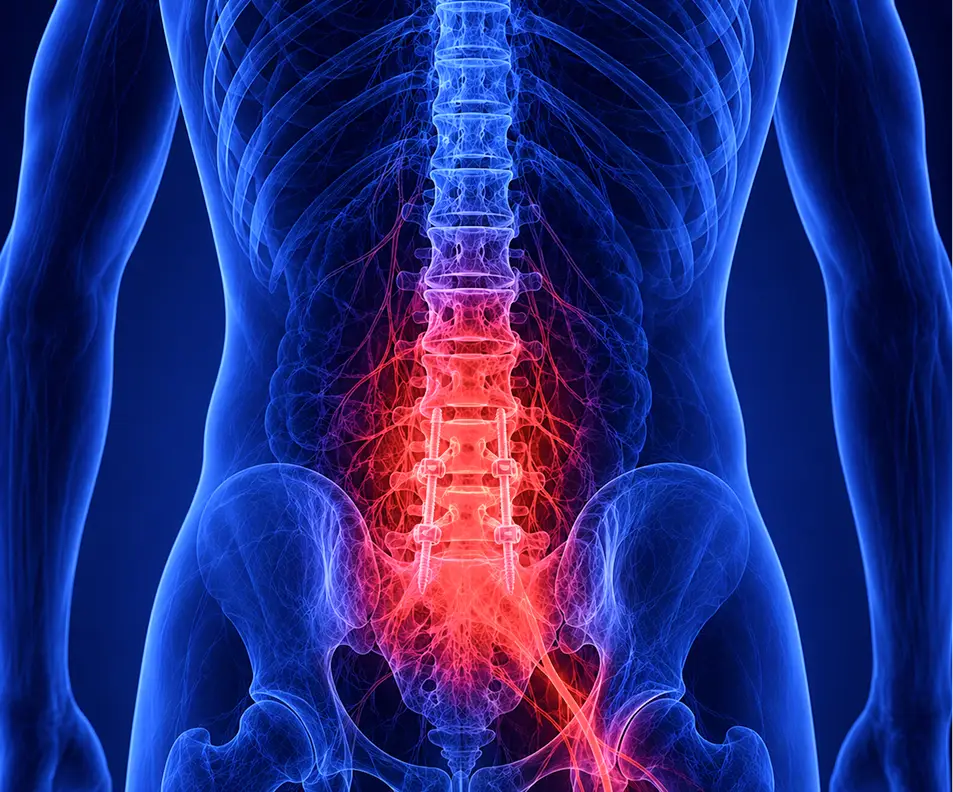
Failed back surgery syndrome is one of the most complex and undertreated causes of chronic spinal pain, affecting patients who continue to experience significant pain following spinal surgery.

At Painacea, failed back surgery syndrome care is built around identifying the exact source of persistent pain and treating it with targeted, minimally invasive solutions designed for long-term control, not temporary relief.

Painacea is defined by:

  • Precision-led, minimally invasive approach
  • Specialist diagnosis, not symptom-based treatment
  • Focus on long-term control and functional recovery
Book a Specialist Consultation

About

What Is Failed Back Surgery Syndrome?

Failed back surgery syndrome, commonly referred to as FBSS, describes a condition in which a patient continues to experience chronic pain following spinal surgery that was intended to relieve it.
What Is Failed Back Surgery Syndrome?

Key characteristics of FBSS include:

  • Persistent or recurring pain at the original surgical site

  • New pain patterns that developed following surgery

  • Functional limitations that remain despite surgical intervention

  • Pain that may be spinal, nerve-related, or both

FBSS can follow surgery performed on any region of the spine:

  • Cervical: Persistent neck pain, arm pain, or headaches following neck surgery

  • Thoracic: Ongoing mid-back discomfort following thoracic procedures

  • Lumbar: Lower back and leg pain following lumbar surgery, the most common presentation

Causes

What Are The Causes of Failed Back Surgery Syndrome?

FBSS develops when one or more contributing factors prevent the expected surgical outcome.

Common causes include:

  • Scar tissue formation, known as epidural fibrosis, compressing nerves around the surgical site
  • Recurrent disc herniation at the same or adjacent spinal level
  • Spinal instability following surgery
  • Nerve damage sustained during the original procedure
  • Incomplete decompression of the nerve during surgery
  • Adjacent segment disease, where levels above or below the surgery degenerate as a result of altered spinal mechanics
  • Incorrect diagnosis prior to surgery, meaning the true pain source was never addressed
  • Psychological and central sensitisation factors contributing to pain persistence
  • Hardware complications including implant failure or loosening
What Are The Causes of Failed Back Surgery Syndrome?
What Are The Symptoms of Failed Back Surgery Syndrome?

Symptoms

What Are The Symptoms of Failed Back Surgery Syndrome?

Failed back surgery syndrome symptoms vary depending on the spinal level involved and the underlying cause of persistent pain.

Common symptoms include:

  • Persistent dull or burning pain in the back or neck that did not resolve after surgery
  • Radiating pain into the arms or legs, depending on the level affected
  • Numbness, tingling, or weakness in the limbs
  • New or worsening pain at levels adjacent to the surgical site
  • Localised tenderness over the surgical area
  • Reduced spinal mobility and flexibility
  • Pain that worsens with activity and eases with rest
  • Sleep disturbance and fatigue linked to unresolved pain
  • In advanced cases, significant functional limitation affecting daily activities

FBSS symptoms are frequently accompanied by psychological impact including anxiety, depression, and reduced quality of life, all of which require consideration in a comprehensive treatment plan.

Treatment

What Are The Treatment Options for Failed Back Surgery Syndrome?

Treatment at Painacea is guided by the underlying cause of persistent pain, not symptoms alone. The approach is non-surgical first, with interventions selected based on what is structurally and neurologically driving the pain.

Neuromodulation

For patients with persistent nerve pain following spinal surgery, neuromodulation offers targeted electrical intervention:

  • Spinal cord stimulation delivers low-level electrical impulses to the spinal cord
  • Dorsal root ganglion stimulation targets nerve roots responsible for local or radiating pain
  • Particularly effective for FBSS involving pain that has not responded to other treatments

Minimally Invasive Spine Procedures

For patients with structural causes of FBSS including scar tissue, nerve compression, or adjacent segment disease:

  • They allow direct visualisation and targeted treatment of the pain source
  • Epidural adhesiolysis is performed to break down scar tissue compressing spinal nerves
  • Significantly reduced recovery time compared to revision open surgery

Precision-Guided Interventions

For nerve and spine-related pain components of FBSS:

  • Radiofrequency ablation targets specific nerves transmitting pain signals, providing relief lasting 12 to 24 months
  • Cryoablation uses precisely targeted extreme cold to disrupt pain-transmitting nerves as a clinically effective alternative
  • Image-guided epidural injections for targeted anti-inflammatory relief at the pain source

Regenerative Therapies

For patients where tissue repair and inflammation management are contributing to persistent pain:

  • Platelet-rich plasma therapy supports tissue healing and reduces localised inflammation
  • Biologic treatments target underlying tissue degeneration

Neuromodulation

For patients with persistent nerve pain following spinal surgery, neuromodulation offers targeted electrical intervention:

  • Spinal cord stimulation delivers low-level electrical impulses to the spinal cord
  • Dorsal root ganglion stimulation targets nerve roots responsible for local or radiating pain
  • Particularly effective for FBSS involving pain that has not responded to other treatments

Minimally Invasive Spine Procedures

For patients with structural causes of FBSS including scar tissue, nerve compression, or adjacent segment disease:

  • They allow direct visualisation and targeted treatment of the pain source
  • Epidural adhesiolysis is performed to break down scar tissue compressing spinal nerves
  • Significantly reduced recovery time compared to revision open surgery

Precision-Guided Interventions

For nerve and spine-related pain components of FBSS:

  • Radiofrequency ablation targets specific nerves transmitting pain signals, providing relief lasting 12 to 24 months
  • Cryoablation uses precisely targeted extreme cold to disrupt pain-transmitting nerves as a clinically effective alternative
  • Image-guided epidural injections for targeted anti-inflammatory relief at the pain source

Regenerative Therapies

For patients where tissue repair and inflammation management are contributing to persistent pain:

  • Platelet-rich plasma therapy supports tissue healing and reduces localised inflammation
  • Biologic treatments target underlying tissue degeneration
Painacea

Why Choose Us

Why Choose Painacea?

Care is centred on identifying the source of pain and delivering targeted, effective solutions.

  • list icon

    17+ years of experience in pain medicine and anesthesiology

  • list icon

    Specialist in minimally invasive, image-guided interventions

  • list icon

    Strong focus on precise diagnosis before treatment

  • list icon

    Expertise in managing complex spine, nerve, and pain conditions

  • list icon

    International training across USA, Europe, and South Korea

  • list icon

    Academic leadership as Professor and Fellowship Mentor

Book a Specialist Consultation

FAQs

Frequently Asked Questions

Treatment options include spinal cord stimulation, minimally invasive endoscopic procedures, radiofrequency ablation, and regenerative therapies, selected based on the specific cause of persistent pain.

Pain may persist or worsen, new pain can develop at adjacent spinal levels, and hardware complications such as loosening or implant failure may occur. Targeted non-surgical intervention is usually the next step.

Persistent back or neck pain, radiating pain into the limbs, numbness, tingling, weakness, reduced mobility, and in some cases entirely new pain patterns that were not present before surgery.

Through clinical history, physical examination, advanced imaging such as MRI and CT, and in some cases diagnostic nerve blocks to identify the precise source of persistent pain.

Not necessarily. With the right treatment plan, including neuromodulation and minimally invasive procedures, significant pain reduction and functional recovery are achievable for most patients.

Contact

Considering Further Evaluation for Persistent Pain?

A consultation can help determine appropriate next steps based on your condition.

hello@painacea.in +91 94192 00497

First Floor, Shrikant Chambers - c, 125, B Wing, next to RK Studios, Chembur, Mumbai - 400071

    Get a Precise Diagnosis