
Nerve Pain Blocking
For chest pain driven by nerve compression or tumour-related nerve involvement, options include:
- Radiofrequency ablation
- Intercostal nerve targeting
- Image-guided precision delivery
Conditions
Overview
Precision in diagnosis. Clarity in treatment.
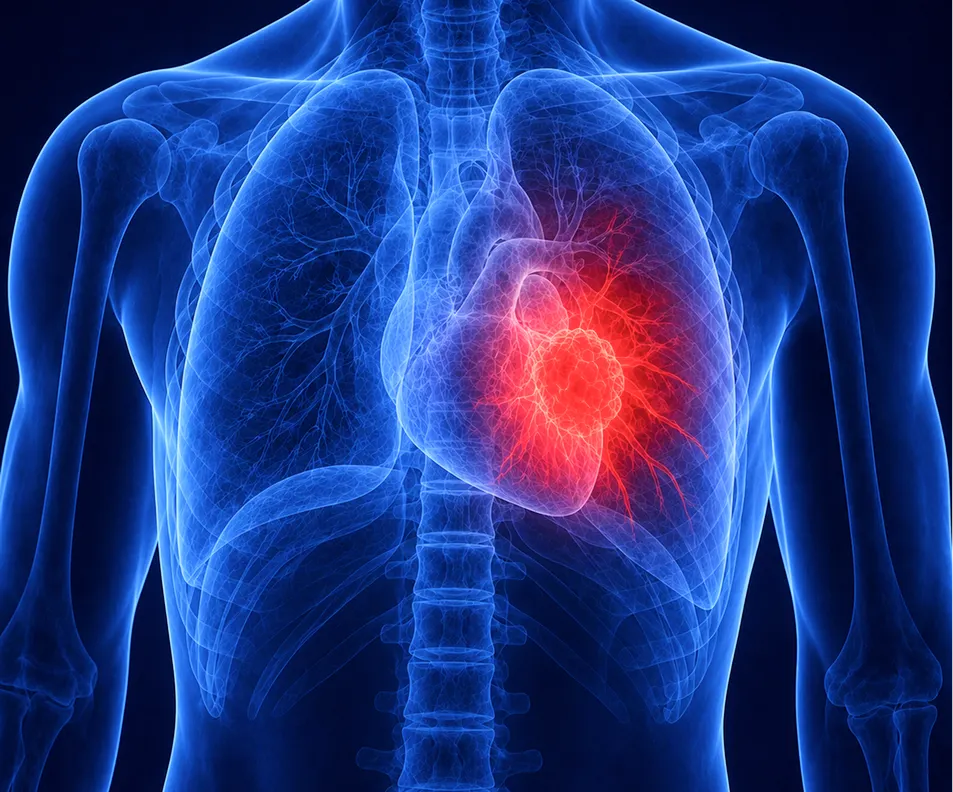
Chest pain in cancer patients is rarely straightforward. It is almost always the result of identifiable changes within the chest, whether from tumour growth, nerve involvement, or treatment-related effects disrupting normal tissue and organ function.
At Painacea, the focus is on tracing the source of chest pain to its root cause and delivering targeted, minimally invasive treatment aimed at sustained relief and improved quality of life, not temporary pain management.
Painacea is defined by:
About


Tumour growth pressing on surrounding tissue, nerves, or organs
Pleural involvement causing pain with breathing or movement
Treatment-related effects, such as radiation fibrosis or chemotherapy-induced nerve damage
Musculoskeletal strain from prolonged immobility or postural changes
Referred pain from abdominal or spinal involvement
Central chest pain: commonly associated with oesophageal, lung, or mediastinal involvement
One-sided pain: often linked to pleural effusion, pneumonia, or localised tumour pressure
Pain worsening with breathing or movement: typically indicative of pleural or musculoskeletal involvement
Deep, aching pain at rest: frequently associated with nerve compression or bone metastasis
Upper chest and shoulder pain: often related to apical lung tumours or referred diaphragmatic irritation
Treatment
Causes
Chest pain in cancer is usually the result of a combination of mechanical, neurological, and treatment-related factors. When the underlying cause goes unaddressed, pain tends to intensify and become increasingly difficult to manage over time.
Common reasons for chest pain in cancer include:


Symptoms
Chest pain in cancer presents differently depending on the underlying cause, the structures involved, and the stage of the disease. Recognising the pattern is the first step towards accurate diagnosis and effective pain management.
Common symptoms of chest pain in cancer include:
Chest pain that follows a progressive, evolving pattern is rarely coincidental in a cancer patient and points to a specific, identifiable underlying cause that warrants precise evaluation.

Why Choose Us
Persistent pain does not always need the same treatment. At Painacea, we first identify the likely source and mechanism of pain, then help you choose the appropriate next step.
Symptoms, examination, function and imaging are correlated before recommending treatment.
The pathway may include medical care, rehabilitation, a targeted MIPSI, surgical evaluation or a coordinated combination.
Image-guided interventions, radiofrequency procedures, neuromodulation and selected minimally invasive spine treatments are considered only when clinically appropriate.
If another specialist or surgery is the appropriate next step, we recommend it rather than delaying necessary treatment.
FAQs
Chest pain cancer symptoms vary depending on the underlying cause. It most commonly presents as a deep, persistent ache that does not resolve with rest, a sharp or stabbing pain that worsens with breathing or movement, or a burning sensation along the chest wall indicating nerve involvement. Unlike muscular pain, chest pain and cancer symptoms tend to evolve in character over time rather than remaining constant.
The most effective way to manage anxiety around chest pain is to get a precise diagnosis. A specialist should always evaluate unexplained or persistent chest pain. Understanding exactly what drives the pain removes uncertainty and allows for a targeted, structured treatment plan.
Sudden, severe chest pain or new breathlessness in cancer patients is a medical emergency that requires immediate emergency room evaluation to rule out life-threatening conditions like a pulmonary embolism or heart attack. Specialist pain evaluation is highly appropriate only once these acute medical emergencies have been completely investigated and safely ruled out.
Yes, and early evaluation is always the right course of action.
Chest pain in lung cancer is most commonly driven by tumour pressure on the chest wall, pleura, or surrounding nerves. Pleural involvement typically produces sharp pain that worsens with breathing, while advanced disease can cause deeper, persistent pain through bone metastasis or nerve compression. Each cause is distinct and responds to a different treatment approach.
A consultation can help determine appropriate next steps based on your condition.
125, B wing, First floor, Shrikant Chambers, Next to RK Studios, Chembur, Mumbai, Maharashtra 400071