
Conditions

Cervical Disc Herniation

Specialist-Led Pain Evaluation and Care

Overview

Specialist-Led Pain Evaluation and Care

Precision in diagnosis. Clarity in treatment.

Cervical disc herniation is rarely a coincidence. In most cases, it develops from a combination of structural stress, age-related changes, and mechanical strain on the neck that, when left unaddressed, leads to progressive nerve compression and worsening symptoms.

At Painacea,  cervical herniated disc treatment is built around identifying the exact source of pain and nerve involvement, and treating it with targeted, minimally invasive solutions designed for long-term control, not temporary relief.

Painacea is defined by:

  • Precision-led, minimally invasive approach
  • Specialist diagnosis, not symptom-based treatment
  • Focus on long-term control and functional recovery
Book a Specialist Consultation

About

What Is Cervical Disc Herniation?

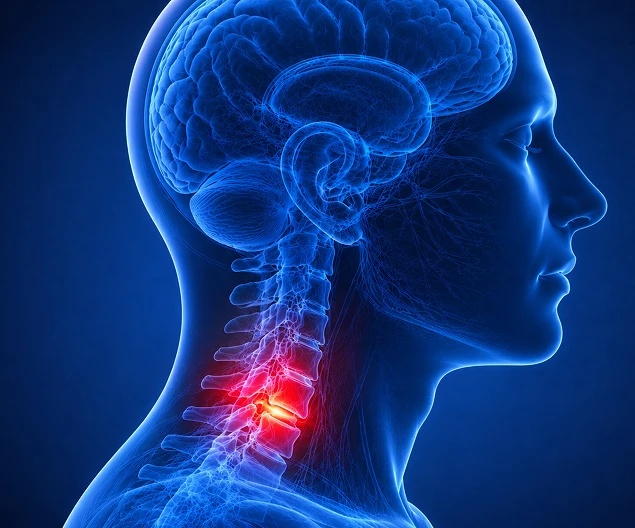
Cervical disc herniation occurs when one of the intervertebral discs in the neck ruptures or bulges out of its normal position, pressing on nearby nerve roots or the spinal cord. The cervical spine contains seven vertebrae and the discs between them act as shock absorbers. When a disc herniates, its inner gel-like material pushes through the outer layer, creating pressure on surrounding structures that produces pain, numbness, and weakness.
What Is Cervical Disc Herniation?

Most cases of cervical disc herniation involve:

  • Compression of a nerve root exiting the cervical spine

  • Pressure on the spinal cord itself in more severe cases

  • Degenerative changes that weaken the disc over time

  • Acute injury or sudden mechanical stress to the neck

  • Inflammation around the affected disc and nerve

The location often tells you more than the intensity:

  • Pain radiating from the neck into the shoulder and arm: typical of nerve root compression

  • Numbness or tingling in the fingers or hand: reflects the specific cervical level affected

  • Weakness in the arm or grip: indicates more significant nerve involvement

  • Neck pain with balance or coordination difficulties: may suggest spinal cord compression requiring urgent assessment

Causes

What Are the Causes of Cervical Disc Herniation?

Cervical disc herniation causes are most commonly a combination of degenerative, mechanical, and lifestyle factors. When the underlying contributors go unaddressed, nerve compression tends to worsen and symptoms become more complex over time.

Common causes include:

  • Age-related disc degeneration reducing disc height and structural integrity
  • Repetitive strain from prolonged poor posture or screen use
  • Sudden trauma such as a whiplash injury or fall
  • Heavy lifting or activities that place sustained load on the cervical spine
  • Genetic predisposition to early disc degeneration
  • Occupational factors involving sustained neck flexion or vibration exposure
  • Smoking, which accelerates disc degeneration by reducing disc nutrition
What Are the Causes of Cervical Disc Herniation?
What Are the Symptoms of Cervical Disc Herniation?

Symptoms

What Are the Symptoms of Cervical Disc Herniation?

Cervical disc herniation symptoms vary depending on which disc is affected and whether a nerve root or the spinal cord is involved. Recognising the pattern is the first step towards accurate diagnosis and effective treatment.

Common symptoms include:

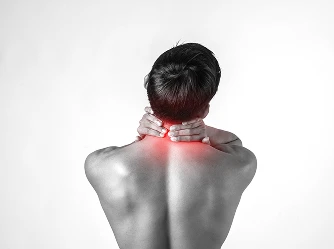
  • Neck pain that may be sharp, aching, or burning in quality
  • Pain radiating from the neck into the shoulder, arm, or hand
  • Numbness, tingling, or pins and needles along the arm or into specific fingers
  • Weakness in the shoulder, arm, or hand affecting grip and fine motor function
  • Symptoms that worsen with certain neck positions or prolonged sitting
  • Headaches associated with upper cervical involvement

Symptoms affecting balance, coordination, or bladder and bowel function may indicate spinal cord compression and require urgent evaluation.

Treatment

What Are the Treatment Options for Cervical Disc Herniation?

Treatment at Painacea is guided by cause, not symptoms. The approach is non-surgical first, with interventions selected based on what is actually driving the nerve compression and pain.

Precision-Guided Interventions

For nerve and spine-related pain from cervical disc herniation:

  • Image-guided cervical epidural steroid injections to reduce inflammation around compressed nerve roots
  • Selective nerve root blocks for both diagnostic confirmation and therapeutic relief
  • Radiofrequency ablation for facet joint-related cervical pain contributing to the overall pain pattern
  • Imaging-guided treatment planning to accurately target the affected spinal level

Physiotherapy and Movement Correction

For addressing the mechanical contributors and restoring long-term function:

  • Postural correction and cervical spine alignment
  • Strengthening of the deep cervical flexors and surrounding musculature
  • Reducing mechanical load on the affected disc and nerve root
  • Activity modification and ergonomic guidance to support recovery and prevent recurrence

Conservative and Supportive Management

For ongoing symptom control alongside targeted interventions:

  • Anti-inflammatory medications and neuropathic pain agents where clinically appropriate
  • Structured activity guidance to prevent aggravation during recovery
  • Patient education on posture, positioning, and load management
  • Long-term strategies to minimise recurrence and maintain spinal health

Surgical Options

For cases that do not respond to conservative and minimally invasive treatment:

  • Anterior cervical discectomy and fusion for persistent nerve compression
  • Cervical disc replacement in suitable candidates to preserve motion at the affected level
  • Surgical decompression where significant spinal cord compression is present
  • Surgery is recommended only after thorough assessment, imaging review, and failure of non-surgical options

Precision-Guided Interventions

For nerve and spine-related pain from cervical disc herniation:

  • Image-guided cervical epidural steroid injections to reduce inflammation around compressed nerve roots
  • Selective nerve root blocks for both diagnostic confirmation and therapeutic relief
  • Radiofrequency ablation for facet joint-related cervical pain contributing to the overall pain pattern
  • Imaging-guided treatment planning to accurately target the affected spinal level
Physiotherapy and Movement Correction

For addressing the mechanical contributors and restoring long-term function:

  • Postural correction and cervical spine alignment
  • Strengthening of the deep cervical flexors and surrounding musculature
  • Reducing mechanical load on the affected disc and nerve root
  • Activity modification and ergonomic guidance to support recovery and prevent recurrence

Conservative and Supportive Management

For ongoing symptom control alongside targeted interventions:

  • Anti-inflammatory medications and neuropathic pain agents where clinically appropriate
  • Structured activity guidance to prevent aggravation during recovery
  • Patient education on posture, positioning, and load management
  • Long-term strategies to minimise recurrence and maintain spinal health

Surgical Options

For cases that do not respond to conservative and minimally invasive treatment:

  • Anterior cervical discectomy and fusion for persistent nerve compression
  • Cervical disc replacement in suitable candidates to preserve motion at the affected level
  • Surgical decompression where significant spinal cord compression is present
  • Surgery is recommended only after thorough assessment, imaging review, and failure of non-surgical options
Painacea

Why Choose Us

Why Choose Painacea?

Care is centred on identifying the source of pain and delivering targeted, effective solutions.

  • list icon

    17+ years of experience in pain medicine and anesthesiology

  • list icon

    Specialist in minimally invasive, image-guided interventions

  • list icon

    Strong focus on precise diagnosis before treatment

  • list icon

    Expertise in managing complex spine, nerve, and pain conditions

  • list icon

    International training across USA, Europe, and South Korea

  • list icon

    Academic leadership as Professor and Fellowship Mentor

Book a Specialist Consultation

FAQs

Frequently Asked Questions

A cervical disc herniation occurs when an intervertebral disc in the neck bulges or ruptures and presses on a nearby nerve root or the spinal cord. This can cause neck pain, arm pain, numbness, and weakness depending on the affected level.

Common symptoms include neck pain, pain radiating into the shoulder and arm, numbness or tingling in the fingers, and weakness in the arm or hand. More severe cases may affect balance and coordination.

Diagnosis is based on clinical history, neurological examination, and imaging studies. MRI is the most accurate investigation for identifying the affected disc and evaluating nerve root or spinal cord compression.

Yes. Most patients improve with a combination of physiotherapy, activity modification, medication, and targeted image-guided interventions. Surgery is required only in selected cases.

If neck pain is persistent, worsening, or associated with arm pain, numbness, tingling, or weakness. Symptoms affecting balance, coordination, or bladder and bowel function require urgent specialist assessment.

Contact

Considering Further Evaluation for Persistent Pain?

A consultation can help determine appropriate next steps based on your condition.

hello@painacea.in +91 94192 00497

First Floor, Shrikant Chambers - c, 125, B Wing, next to RK Studios, Chembur, Mumbai - 400071

    Get a Precise Diagnosis