Regenerative Injections
For tendon repair and tissue recovery, options include:
- Platelet-rich plasma injections
- Prolotherapy to promote collagen repair and restore structural integrity
- Targeted to address degenerative changes
Conditions
Overview
Precision in diagnosis. Clarity in treatment.
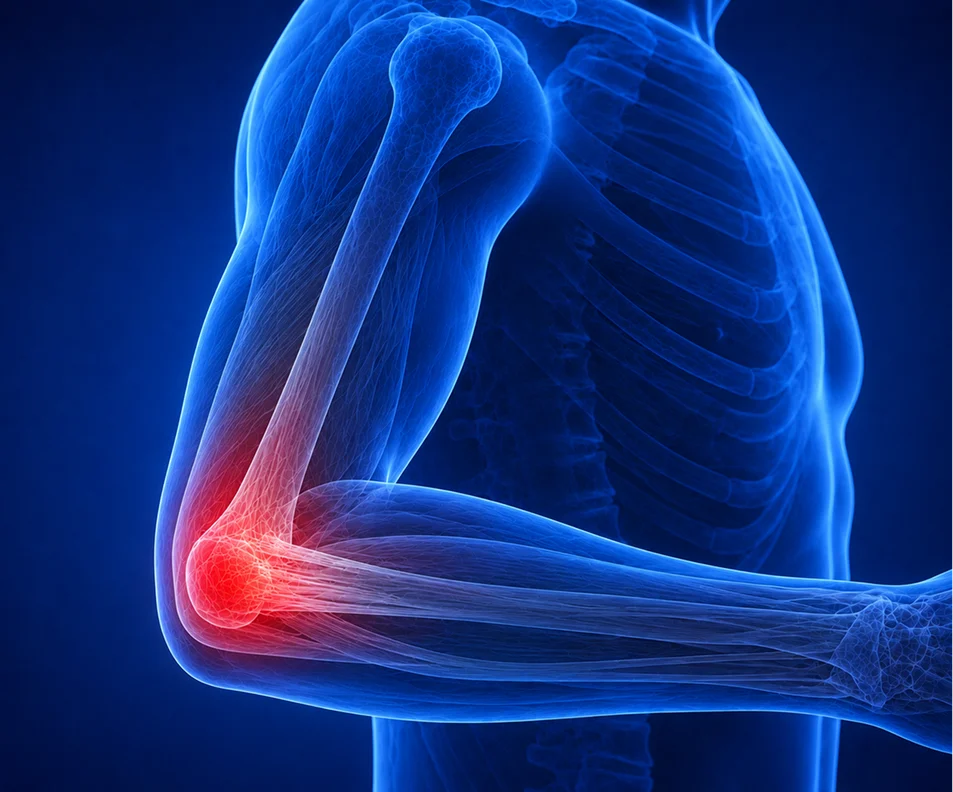
Golfer’s elbow rarely develops without an identifiable cause. In most cases, it is driven by specific mechanical stress, repetitive loading patterns, or underlying muscle imbalance affecting the tendons of the forearm and inner elbow.
At Painacea, golfers’ elbow treatment and care are built around identifying the exact source of tendon stress and treating it with targeted, minimally invasive solutions designed for long-term recovery, not temporary relief.
Painacea is defined by:
About

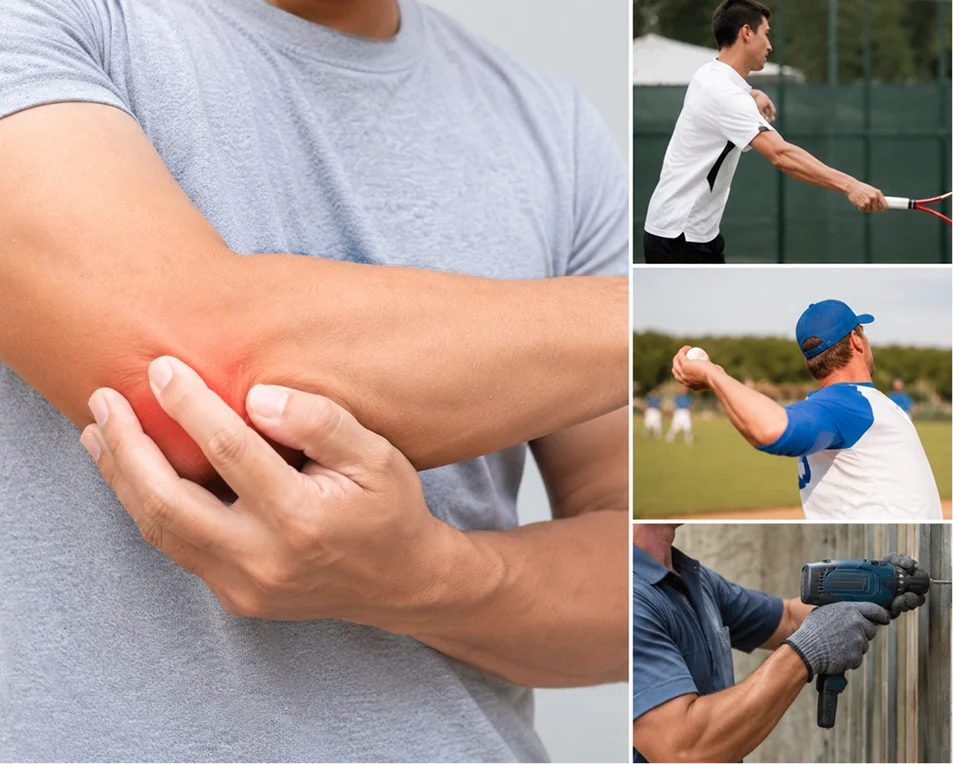
Repetitive gripping, flexion, or wrist pronation placing sustained stress on the medial forearm tendons
Sudden increases in activity or load beyond what the tendon can absorb
Poor technique in racquet sports, throwing activities, or repetitive occupational tasks
Muscle weakness or imbalance in the forearm, shoulder, or upper back
Age-related decline in tendon elasticity
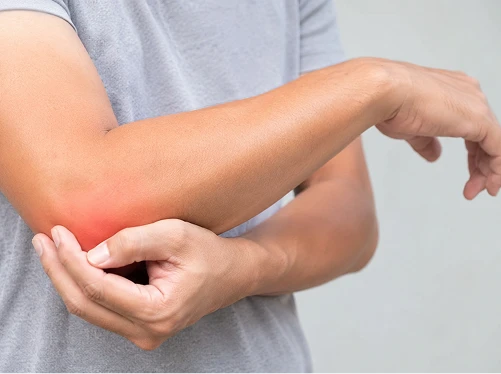
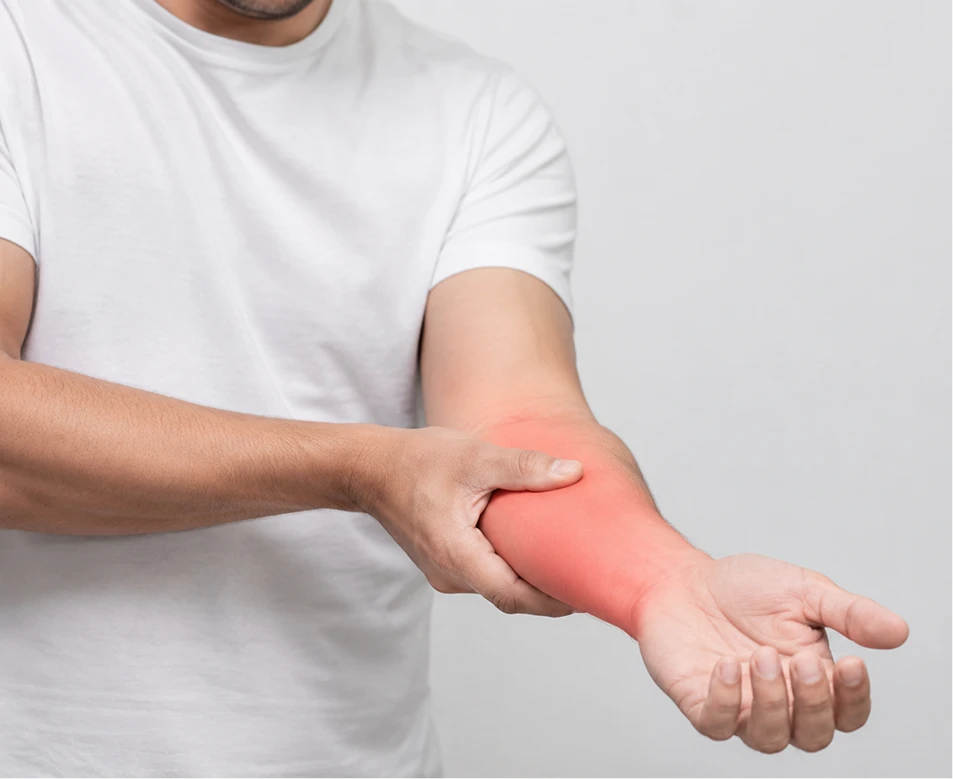
Pain on the inner elbow worsening with gripping or wrist flexion: classic tendinitis of elbow pattern at the medial epicondyle
Weakness in grip strength: indicative of significant tendon involvement affecting forearm function
Pain radiating down the inner forearm: suggesting nerve irritation alongside tendon stress, sometimes involving the ulnar nerve
Symptoms worsening with specific movements such as throwing, swinging, or lifting with the palm facing up: pointing to load-dependent tendon irritation
Pain at rest or at night in advanced cases: indicating a more chronic and degenerative tendon condition
Treatment
Causes
Golfer’s elbow causes are usually the result of a combination of mechanical, degenerative, and lifestyle factors. When the underlying cause goes unaddressed, the tendon continues to sustain microscopic damage, and symptoms tend to worsen or become chronic over time.
Common golfer’s elbow causes include the following:
Symptoms
Golfer’s elbow symptoms vary depending on the severity of tendon involvement and how long the condition has been present. Recognising the pattern is the first step to accurate diagnosis.
Common golfer’s elbow symptoms include:
Pain that consistently worsens with gripping or forearm loading and follows a predictable, activity-dependent pattern points to a specific, identifiable source of medial tendon stress.

Why Choose Us
Persistent pain does not always need the same treatment. At Painacea, we first identify the likely source and mechanism of pain, then help you choose the appropriate next step.
Symptoms, examination, function and imaging are correlated before recommending treatment.
The pathway may include medical care, rehabilitation, a targeted MIPSI, surgical evaluation or a coordinated combination.
Image-guided interventions, radiofrequency procedures, neuromodulation and selected minimally invasive spine treatments are considered only when clinically appropriate.
If another specialist or surgery is the appropriate next step, we recommend it rather than delaying necessary treatment.
FAQs
Golfer’s elbow is most commonly caused by repetitive wrist flexion or gripping movements that place sustained stress on the tendons attaching to the medial epicondyle of the humerus. Poor technique, sudden increases in load, and muscle imbalance are the most frequent golfers elbow causes.
The most effective golfers’ elbow treatment combines targeted regenerative treatments, such as PRP injections, with a structured tendon loading programme to address both degeneration and the mechanical cause. For persistent cases, advanced pulsed radiofrequency (PRF) neuromodulation can safely provide the precise pain control needed to make rehabilitation possible without risking thermal damage to surrounding nerves.
Avoid continuing activities that load the medial forearm tendons through repetitive gripping, wrist flexion, or forearm pronation without addressing the underlying cause. Passive rest alone, unsupervised stretching, and prolonged anti-inflammatory reliance are unlikely to resolve the condition and can delay meaningful recovery. A golfer’s elbow brace can help offload the tendon during activity but should be used as part of a structured plan, not as a standalone solution.
Golfers elbow healing time varies depending on severity. Mild cases can resolve within a few weeks with appropriate load management and targeted intervention. Chronic or degenerative cases may take several months, and without structured treatment, recovery is often incomplete and slow.
Controlled, progressive tendon loading exercises such as wrist flexor eccentric curls and forearm pronation strengthening are the most evidence-backed approaches for golfer’s elbow rehabilitation. Physical therapy for golfer’s elbow and exercises for golfer’s elbow should always be guided by a specialist, as poorly structured programmes can aggravate the condition rather than resolve it.
A consultation can help determine appropriate next steps based on your condition.
125, B wing, First floor, Shrikant Chambers, Next to RK Studios, Chembur, Mumbai, Maharashtra 400071