

Immediately After
Mild soreness around the incision site is normal and settles within a few days.
Conditions
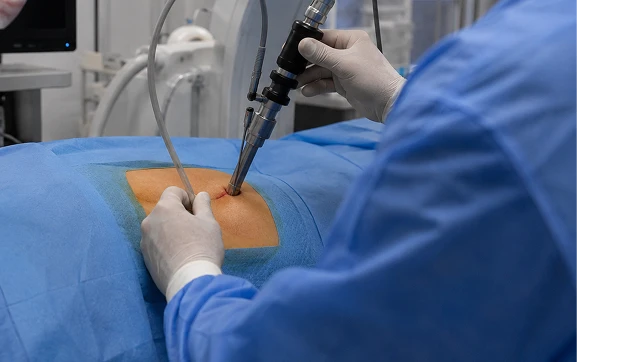
Overview
Minimally Invasive Spine Endoscopic Pain Procedure(MISEpp) offers a precise, targeted path to relief, using advanced endoscopic techniques to treat the source of your spine pain through an incision smaller than a centimetre.
About
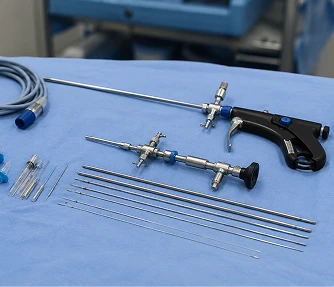

A small incision of less than one centimetre gives access to the spine
A live HD camera guides the specialist directly to the pain source
Micro-instruments decompress, remove, or treat damaged tissue with precision
Surrounding muscles and healthy structures remain completely undisturbed
Targeted relief for disc, nerve, and spinal canal related pain
A procedure performed under local anaesthesia with light sedationA procedure performed under local anaesthesia with light sedation
Significantly shorter recovery compared to conventional spine surgery
A well-established approach used by specialist spine and pain centres worldwide
Eligibility
You may be a candidate for MISEpp if you have been living with spine-related pain that has not improved with conservative treatments like medication, physiotherapy, or injections.
A thorough clinical evaluation is always required to confirm whether Minimally Invasive Spine Endoscopic Pain Procedure(MISEpp) is the right option for you.
If you have experienced any of these, a consultation with Painacea is the right place to start.

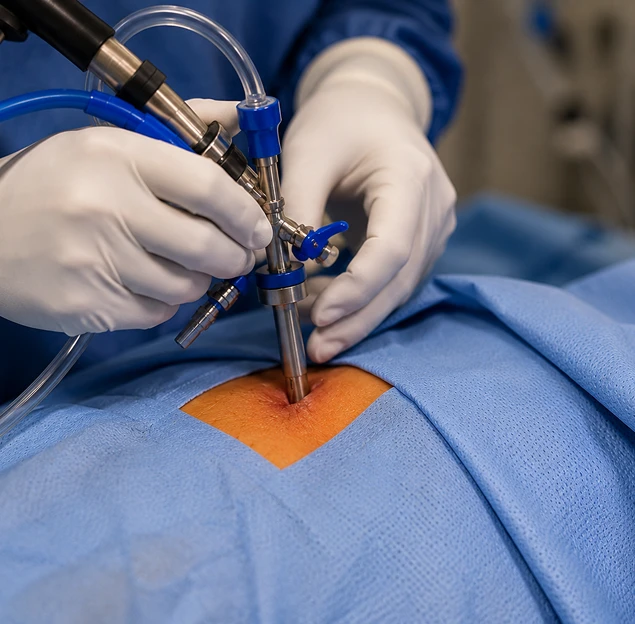
Procedure
Imaging and clinical assessment pinpoint the exact source of pain before anything begins.
The treatment area is numbed with local anaesthesia, with light IV sedation available throughout.
A tiny incision of less than one centimetre is made, no large cuts, no general anaesthesia.
A thin camera tube is guided to the affected spinal area under real-time X-ray.
Micro-instruments passed through the endoscope are used to remove, decompress, or treat the exact source of pain.
The incision is closed, and most patients are discharged the same day.
Recovery
Why Choose Us
Persistent pain does not always need the same treatment. At Painacea, we first identify the likely source and mechanism of pain, then help you choose the appropriate next step.
Symptoms, examination, function and imaging are correlated before recommending treatment.
The pathway may include medical care, rehabilitation, a targeted MIPSI, surgical evaluation or a coordinated combination.
Image-guided interventions, radiofrequency procedures, neuromodulation and selected minimally invasive spine treatments are considered only when clinically appropriate.
If another specialist or surgery is the appropriate next step, we recommend it rather than delaying necessary treatment.
FAQs
A minimally invasive spine endoscopic procedure uses a tiny camera and specialised instruments to treat spine pain through a very small incision
MISEpp can help treat herniated discs, sciatica, spinal stenosis, nerve compression, and chronic neck or back pain.
Most patients return to light daily activities within a few days, with a much shorter recovery than open spine surgery.
The procedure is performed under local anaesthesia with light sedation, and most patients experience only mild soreness afterwards.
Yes. In many cases, minimally invasive spine procedures can provide effective relief without the need for major open spine surgery.
A consultation can help determine appropriate next steps based on your condition.
125, B wing, First floor, Shrikant Chambers, Next to RK Studios, Chembur, Mumbai, Maharashtra 400071


